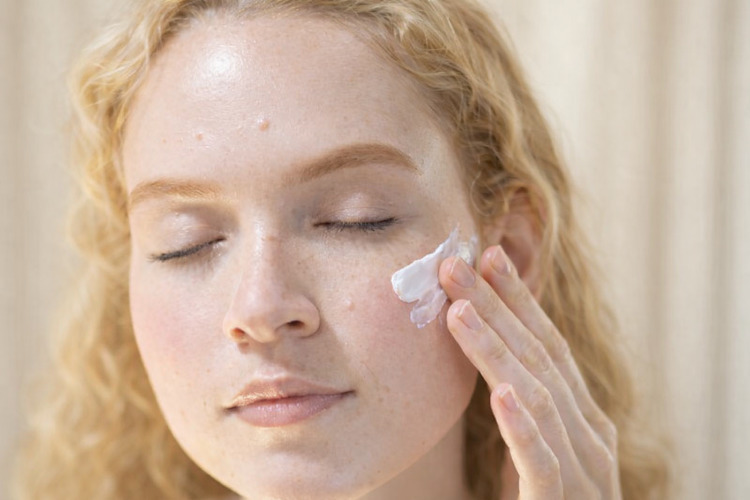
Finding products that suit your skin can be challenging—especially if it’s sensitive. Many people choose items labeled as “hypoallergenic,” expecting a gentle and safe product that won’t cause irritation. However, there is an important nuance: although these products are popular and fly off the shelves, the term “hypoallergenic” is often misleading and doesn’t always reflect reality.
Do products with this label truly live up to their promises? Read our new article to learn what to look for when choosing hypoallergenic cosmetics and how to recognize the signs of an allergic reaction on your skin.
What does the term “hypoallergenic” mean?
The term “hypoallergenic” indicates that a product is designed to minimize the risk of allergic reactions. However, it does not guarantee that it is completely free of allergens.
An ideal hypoallergenic product should not contain ingredients that commonly trigger skin reactions, such as fragrances, quaternium-15, and methylisothiazolinone. In practice, however, manufacturers decide for themselves which products can carry this label. In other words, there are no federal standards for using the term “hypoallergenic,” so such products should be approached with caution. Research shows that even products labeled as hypoallergenic sometimes contain common allergens.
Who is recommended to use hypoallergenic products?
Hypoallergenic products are those designed to minimize the risk of allergic reactions. They are especially useful for people:
- with sensitive skin;
- prone to allergies;
- who experience irritation from certain cosmetic ingredients.
- with sensitive skin;
- prone to allergies;
- who experience irritation from certain cosmetic ingredients.
However, hypoallergenic products can be beneficial for everyone, even if you are not prone to allergies or do not have sensitive skin. Constant exposure to chemicals that may trigger reactions can increase the risk of developing an allergy over time. People with a compromised skin barrier—such as those with eczema or chronic wounds—are particularly vulnerable, making the use of hypoallergenic products especially important for them.
How to determine if you are allergic to a product
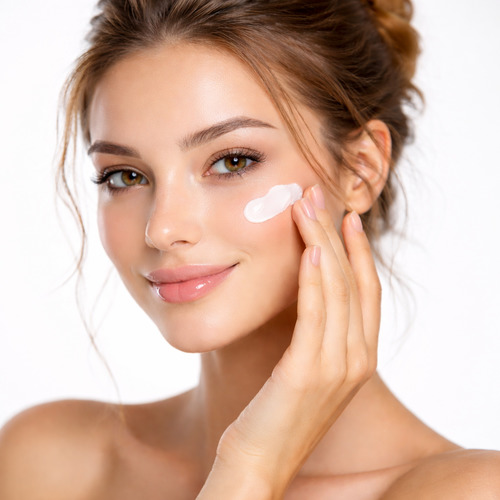
If you develop an allergy to a cosmetic product, it may manifest as redness, itching, swelling, burning, or hives. Symptoms can appear immediately—within a few minutes after application—or several hours or even days later. Sometimes, an allergy develops gradually, so you may unexpectedly become sensitive to a product you previously tolerated without any issues. This is why identifying an allergy is not always straightforward.
You can become allergic to something you used to use without any reaction. Moreover, allergic reactions may not appear immediately and not only at the site of application. For example, an allergy to shampoos often does not affect the scalp but can cause a rash on the eyelids, face, neck, upper chest, or back.
If you suspect an allergic reaction to a cosmetic product, it can be helpful to perform a repeated open application test. To do this, apply a small amount of the product daily to the inner side of your forearm for 2–4 weeks. The appearance of redness, itching, or flaky rash may indicate an allergy. It is best to carry out this test under the supervision of a dermatologist to ensure that the results are safe and reliable.
What to Pay Attention to When Choosing Products
Pay attention to the packaging: look for labels indicating that the product does not contain common allergens such as fragrances, colorants, and preservatives. It is also important to observe how your skin reacts after a few uses.
Keep in mind that the label “hypoallergenic” does not always guarantee safety. Pay special attention to the “fragrance-free” marking (which is not the same as “unscented”) and avoid plant-based products with essential oils. They may contain common sensitizers, such as linalool hydroperoxide, which is currently one of the main causes of skin allergies.
⸻
It is important to understand that the label “hypoallergenic” on a product does not guarantee complete safety for your skin — many companies use this term at their own discretion.
Even products marked as “hypoallergenic” can cause reactions in some individuals. Therefore, people with sensitive skin are advised to first test the product on a small area to ensure there is no unwanted reaction. At the same time, such products generally remain a safer choice compared to those without a “hypoallergenic” label.
For maximum protection, a patch test under the supervision of a dermatologist can be performed — this helps more accurately determine any potential allergic reaction. Overall, if you have doubts or questions about hypoallergenic products, it is best to consult a specialist.