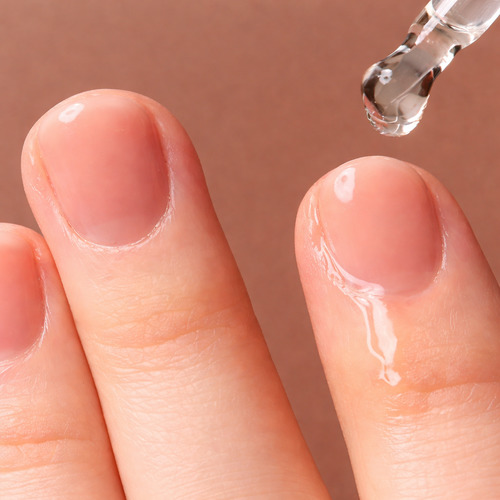
We love beautiful nail art, but sometimes after removing polish, nails may show ridges that raise concerns about their health. Vertical ridges are thin, raised lines on the natural nail plate without any pigmentation. Most often, they are harmless and are a natural part of the aging process, occurring in the majority of people.
These ridges can be compared to wrinkles on the skin: they can appear on both the hands and feet. Causes may include age, genetic predisposition, poor blood circulation, as well as frequent contact with chemicals and water.
Horizontal ridges, however, require more attention. If they appear suddenly or are accompanied by nail discoloration unrelated to injury, it could be a sign of an underlying health issue. In such cases, it is advisable to consult a doctor.
Overall, vertical ridges usually indicate that your nails need extra care and attention.
Below are 12 expert tips for nail care and preventing ridges on the nail plate.
1. Apply oil for deep hydration
As we age, the natural production of skin oils slows down, and a lack of moisture can lead to brittle, thin, and splitting nails, contributing to the formation of ridges. Ridges caused by a deficiency of natural oils are easily manageable, and the first and most effective step is hydration.
As we age, the natural production of skin oils slows down, and a lack of moisture can lead to brittle, thin, and splitting nails, contributing to the formation of ridges. Ridges caused by a deficiency of natural oils are easily manageable, and the first and most effective step is hydration.
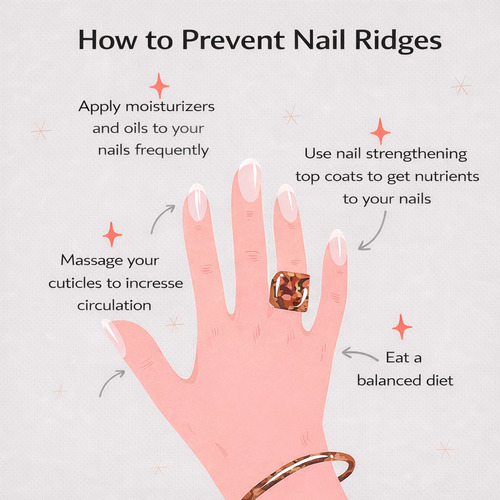
Apply cuticle oil, vitamin E, coconut, or olive oil to your nails—this helps prevent the formation of ridges. Cuticles also benefit: hydration reduces the risk of hangnails, cracks, and discomfort. Use gentle massage movements during application to improve blood circulation around the nail bed and evenly distribute the product.
If you notice horizontal ridges on your nails, especially after an illness, specialists recommend giving your nails extra care for several months or until full regrowth, to keep them healthy and prevent cracking.
2. Regular Moisturizing
Use moisturizing hand soap and a nourishing cream, and apply a strengthening nail polish once a week. When caring for your nails, over-moisturizing is almost impossible — the extra attention will only benefit them. These simple measures help not only to keep your nails strong but also to prevent ridges from forming on the nail surface.
If your nails have become brittle, use intensive moisturizing products, such as Aquaphor ointment, which softens and nourishes the nails. Like oils, these products hydrate the nail bed and protect the surrounding skin from drying out.
Regular care with moisturizing products, daily use of sunscreen for your hands, and limiting contact with drying products, such as alcohol-based sanitizers, will help keep your nails healthy and beautiful.
3. Review Your Diet
A lack of nutrients in your diet can lead to brittle nails. Longitudinal ridges on the nails often appear due to a deficiency in iron, folic acid, or protein. To strengthen your nails, maintain a balanced diet and, if necessary, take multivitamins. If you are unsure whether the ridges may be a symptom of an underlying condition, be sure to consult a qualified doctor.
4. Drink More Water
If dehydration is the main cause of the ridges, it is important to address the root of the problem. Topical treatments like ointments and balms can soothe dry nail beds, but the best results come from hydrating the body from within, at the cellular level. Try to drink 2.5 to 3.5 liters of water a day to support healthy nails and skin.
5. Activate your heart
Regular cardio exercises improve peripheral blood circulation in your fingers and help reduce longitudinal ridges on your nails. Incorporate physical activity into your daily routine to support the health of your cardiovascular system and nail beds.
Regular cardio exercises improve peripheral blood circulation in your fingers and help reduce longitudinal ridges on your nails. Incorporate physical activity into your daily routine to support the health of your cardiovascular system and nail beds.
6. Gently buff your nails
You can buff your nails, but no more than once a month. Excessive or too aggressive buffing can thin the nail plate. To gently smooth out ridges, use a four-sided buffer, file the nail in only one direction, and avoid applying too much pressure to prevent damage to the nail and nail bed.
Pay attention to the buffer’s level of abrasiveness — it can vary significantly. Many buffers used in salons or sold in stores are designed for acrylic nails and can damage natural nails. Experts recommend using Step 2 of the Nail Renewal System, which combines three optimal levels of abrasiveness. This system safely and effectively removes ridges, discoloration, and peeling, giving your nails a healthy, natural shine.
7. Use a Nail Smoothing Polish
While other treatments may take time to show results, experts note that nail polishes can cosmetically mask ridges and uneven surfaces.
The market offers a wide range of special polishes specifically designed to conceal ridges. These products, often called "ridge fillers," look like regular nail polishes but actually function as a base coat. They fill in the ridges, smoothing the nail surface, so that applying regular polish afterwards makes nails appear visually smooth and well-groomed.
However, the effectiveness of these products depends on the specific formula. Many polishes contain formaldehyde or formalin. Initially, these substances may strengthen nails, but over time they can make nails more brittle, increasing the risk of separation from the nail bed (onycholysis). Additionally, formaldehyde and formalin can trigger strong allergic reactions — the skin around the nails may become irritated, swollen, and painful. There is also concern over the potential carcinogenicity of these substances.
Tip from Global Fashion: If you prefer a salon manicure, ask your technician about including a ridge-filling product in your treatment. Some salons already use it as a standard part of the procedure.
8. Give Your Nails a “Break”
Choose natural care and focus on nail health by giving your nails a break from salons, chemicals, and unnecessary time and money spent. Excessive use of nail polish can damage the nail plate, and acetone-based removers further dry out the nails. Avoiding polish helps reduce contact with drying substances and prevents stains that some coatings may leave behind.
9. Wear Gloves During Household Chores
Excessive exposure to water and harsh chemicals—such as cleaning products, hand soaps, or sanitizers—can seriously damage nails and worsen existing ridges. Additionally, frequent handwashing alone can dry out the nail plate.
To prevent ridges from forming after intense cleaning, experts recommend wearing gloves. Using gloves during household chores or any activity involving water protects nails from excessive absorption and evaporation of moisture. When nails absorb too much water, the bonds between cells weaken, leading to peeling, ridges, and brittleness.
10. Give your nails a break from gel and complex designs
Be cautious with popular trends like gel polish and dip powder nails. These coatings can indeed last for weeks and create the impression of stronger nails, which break less during wear. However, in the long term, such procedures can damage the nail plate.
The problem isn’t the gel itself — it doesn’t make nails more ridged. The main risk comes when removing the coating: nails lose natural oils and keratin. Typically, removing gel requires prolonged soaking in acetone, which significantly increases nail brittleness. Other removal methods, like aggressive scraping or intensive filing, can also harm nails, but they work through different mechanisms.
11. Don’t give in to the habit of picking at your nails
Repeated nail-biting or picking at nails and cuticles can lead to thinning of the nail plate and the appearance of ridges. Avoiding these problems is fairly simple — just stop harmful habits and care for your cuticles regularly.
The cuticle serves an important function: it is a natural barrier that protects fingers from dirt and infections. If inflammation occurs, it can damage the nail matrix, and aggressive pushing back of the cuticle itself can injure the nail, leaving permanent ridges that appear along the entire length of new growth.
12. Use specialized nail restoration products
Use specialized products for intensive nail restoration. Their unique formula instantly gives your nails a healthy, hydrated, and youthful shine in just 10 minutes—completely without nail polish.
Repeated nail-biting or picking at nails and cuticles can lead to thinning of the nail plate and the appearance of ridges. Avoiding these problems is fairly simple — just stop harmful habits and care for your cuticles regularly.
The cuticle serves an important function: it is a natural barrier that protects fingers from dirt and infections. If inflammation occurs, it can damage the nail matrix, and aggressive pushing back of the cuticle itself can injure the nail, leaving permanent ridges that appear along the entire length of new growth.
12. Use specialized nail restoration products
Use specialized products for intensive nail restoration. Their unique formula instantly gives your nails a healthy, hydrated, and youthful shine in just 10 minutes—completely without nail polish.