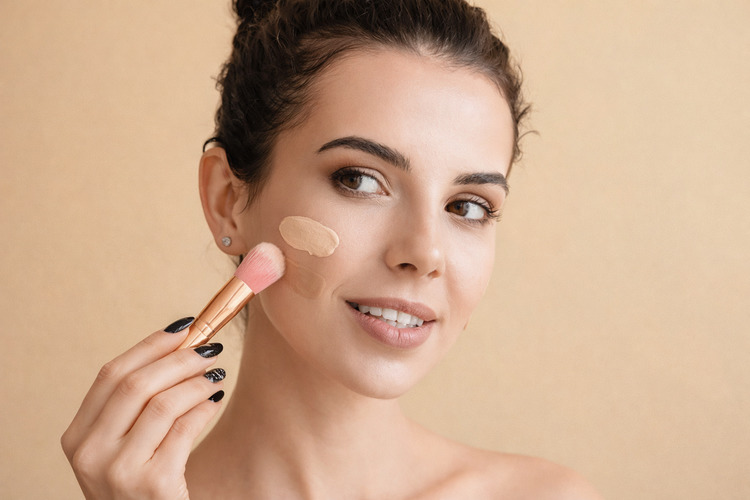
Some makeup artists prefer applying foundation with their fingers, others—celebrities—opt for brushes, and some experts insist that nothing compares to a sponge. These tips sound convincing, but in practice, they often raise even more questions. So, which method really works best? And are there foundation formulas that require specific tools?
For clear and professional answers, check out our new article. It explains in detail when and why you should choose a sponge, in which cases a brush works better, and when fingers deliver the best results.
Keep reading to learn how to apply foundation correctly, understand all the main makeup tools, and find out which one is right for you.
How to Apply Foundation with a Sponge
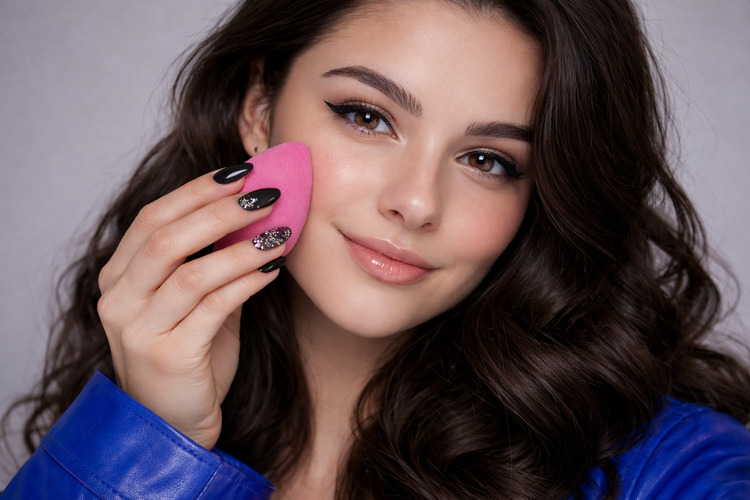
If you’re aiming for a flawless and ultra-natural finish, a sponge can become your ultimate beauty ally. It’s perfect for applying foundation—or other products—smoothly and evenly. However, it’s important to remember that the final result largely depends on the formula of the product itself.
Use a rectangular foundation sponge when working with medium or full coverage but wanting a lighter, radiant, and truly “skin-like” effect. Keep in mind that a damp sponge isn’t always ideal for silicone- or oil-based foundations, as water can alter the product’s texture and affect the longevity of the coverage.
Overall, sponges perform best with lightweight liquid formulas and stick foundations. Thick, dense, or creamy textures, on the other hand, usually require a brush, which allows for better control, precise blending along edges, and a more natural finish.
It’s also worth noting that not all sponges are the same: shape, density, and material directly influence the final look, so each tool delivers its own unique effect.
Moisten the sponge before use
To get the most out of your sponge, always moisten it before use and squeeze out any excess water. It should remain damp but not too wet — this ensures an even and smooth application of foundation.
Start with a small amount of product
Instead of applying a thick layer of foundation, try starting with a small amount and gradually building coverage — this will give you a more natural and even finish. The level of coverage also depends on the type of foundation. For example, stick foundation can be applied directly to the skin for fuller coverage or dabbed onto a damp sponge for a lighter, more natural finish.
How to apply foundation with your fingers

Although personal preferences certainly play an important role in choosing a tool for applying foundation, proper technique is just as crucial. The difference between brushes, sponges, and fingers lies in the type of product and the effect you want to achieve.
For example, fingers are ideal for products that need to be slightly warmed before application. This makes it easier to blend creamy textures such as primer, tinted moisturizer, concealer, or cream eyeshadow. The warmth of your fingers helps the product merge seamlessly with the skin, creating a natural and even finish.
Opt for light coverage
For lightweight foundations, fingers are often the best tool. Use your fingers when working with a light foundation or tinted face product. This method is perfect for quick makeup before heading out: the warmth of your fingers helps the product naturally “melt” into the skin.
Keep your hands clean
Using fingers for foundation application allows for maximum control and precision: you can gently blend the product, ensuring even coverage not only on the face but also on the neck. The key is to make sure your hands are clean. However, this method isn’t suitable for all types of foundations: fingers are almost ineffective with powder-based formulas.
TIP: If you decide to apply the product with your fingers, use your ring finger—it exerts the least pressure. Gently pat the product instead of rubbing it across the skin.
How to apply foundation with brushes
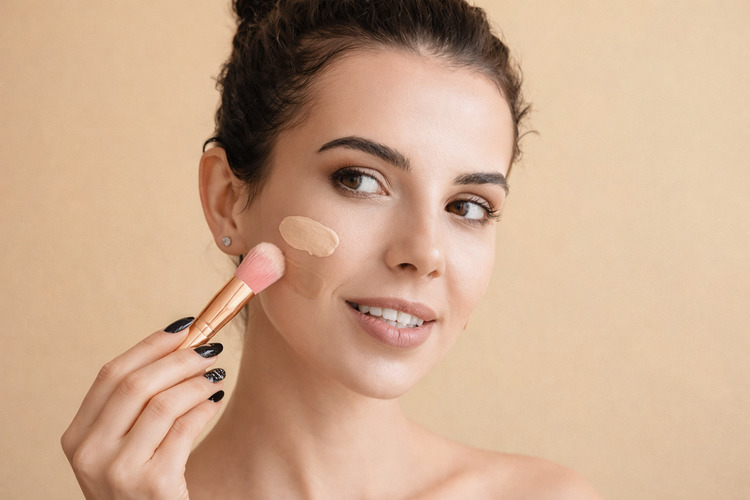
Brushes, like fingers, allow precise application of the product, and sometimes even with greater accuracy. If you need full and even coverage, choose the Global Fashion foundation brush: it provides a perfect result while blending foundation seamlessly.
Choose your brush carefully
The bristles of a brush—their density, quality, and shape—directly affect the final makeup result. To blend and mix foundation perfectly, opt for a dense brush with a flat top or a spatula-shaped edge. Such a brush makes it easy to apply foundation evenly, without streaks or patches. Bristle density is especially important when working with cream or liquid foundations: the denser the bristles, the more control, precision, and ease of blending you get.
For the perfect effect, we recommend the Global Fashion foundation brush — it ensures that your foundation goes on flawlessly and quickly.
Which is better — a brush or a sponge for applying foundation?
The choice of tool depends on the desired effect. For full and even coverage, a brush works best, while a sponge is perfect for achieving a natural finish. Sponges also complement brush application well: the optimal method is to first apply the product with a brush and then gently blend it with a sponge for a flawless finish.
Experiment
Although we tend to stick to familiar products, small experiments can be very beneficial. Try different combinations of tools and products — this will help you discover what works best for you. Using a variety of application techniques and different tools is a great way to experiment and create a personalized routine. It’s especially important to remember that if you frequently switch foundations, methods that worked with one product may not work for another.