
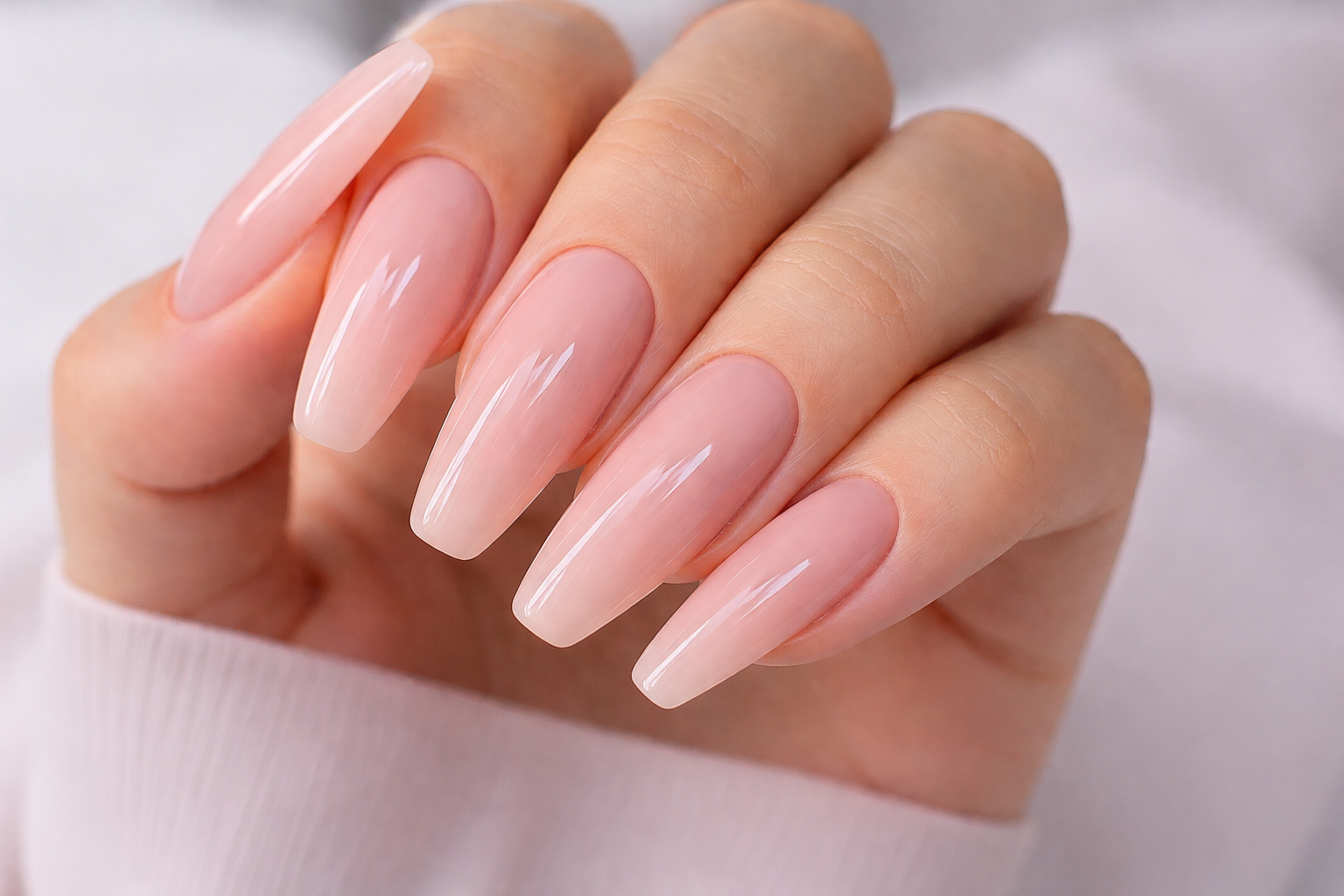
Acrylic nails instantly transform the hands, giving them the desired length and a perfectly neat shape. Long before gel manicures became popular, acrylics were considered the gold standard of long-lasting and luxurious nail design. However, this method also has a downside: acrylic can weaken natural nails and cause them to yellow.
In our new article, we’ll take a closer look at why nails turn yellow after acrylics, how to restore their health, and which care methods can help bring back their natural beauty. Read on to discover all the secrets of healthy nails.
What are acrylic nails?
Acrylic nails are created by mixing a liquid monomer with a powdered polymer, resulting in a moldable paste. Once applied and hardened, this paste mimics the natural nail, maintaining the desired shape and providing long-lasting durability.
One of the key components of acrylic systems is ethyl methacrylate (EMA). EMA acts as an adhesive that allows artificial nails to take shape and securely bond to the natural nail plate. Today, EMA is considered safe and is used in most acrylic products.
Another bonding agent, methyl methacrylate (MMA), is used less frequently. It can cause skin and respiratory irritation with prolonged exposure to its fumes and may trigger allergic reactions such as contact dermatitis.
Acrylic nails are popular due to their combination of aesthetics and practicality. They can be easily shaped into any length or form, giving nail technicians complete creative freedom. In addition, acrylic is also used on toenails—it helps conceal cracks or damage, creating a neat and well-groomed appearance.
Why do nails change color after removing acrylic nails?
Nails often reflect overall health. A change in their color can be a sign of infection or fungus. If a nail remains yellow for a long time, it may indicate more serious issues, such as a deficiency of vitamins or minerals. In some cases, persistent yellowing of the nails despite treatment may be linked to thyroid disorders, psoriasis, or diabetes.
Read on to learn about the most common causes of nail yellowing after acrylic enhancements.
Fungal Infection
Yellowing of the nails is often associated with a fungal infection. Nail fungus, or onychomycosis, is caused by dermatophytes—a specific type of fungus. If the infection develops while wearing acrylic nails, improper removal of the coating can further worsen the condition.
Excessive filing or the use of harsh chemical products during acrylic removal can damage the natural nails. As a result, the nail plate becomes thin and brittle, while the surrounding skin may become irritated due to low-quality products. Experts recommend using non-acetone removers for taking off or cleaning nails, as regular acetone can intensify yellowing.
Over time, nail discoloration is just one of the signs of a fungal infection. The fungus can also cause thickening of the nail plate, crumbling, deformation of the nail shape, unpleasant odor, and increased fragility.
Dehydration
Just like the skin, nails can lose moisture and become dehydrated. Changes in their color are often linked to moisture loss caused by exposure to various chemicals. In some cases, acrylic components may begin to break down, which further increases the risk of yellowing. It is especially important to avoid mixing old monomer with new, even if they are from the same brand—chemical reactions can continue inside containers over time, reducing the overall quality of the product.
Stains
Nails can become stained from nail polish, especially natural nails. It’s also important to note that smoking can cause yellowing of both acrylic and natural nails after removal. Nicotine contributes to a yellow tint on the nails, so it’s best to protect your hands by wearing gloves while smoking, using a cigarette holder or vape, or quitting smoking altogether.
How to Restore Nails After Acrylic Extensions
Treatment
Special treatment for nail yellowing is usually not required, as in most cases it fades on its own. However, there are several ways to reduce the appearance of yellowing. It’s important to remember: if a fungal infection is suspected or the issue persists, you should consult a dermatologist.
Spa Bath for Nails
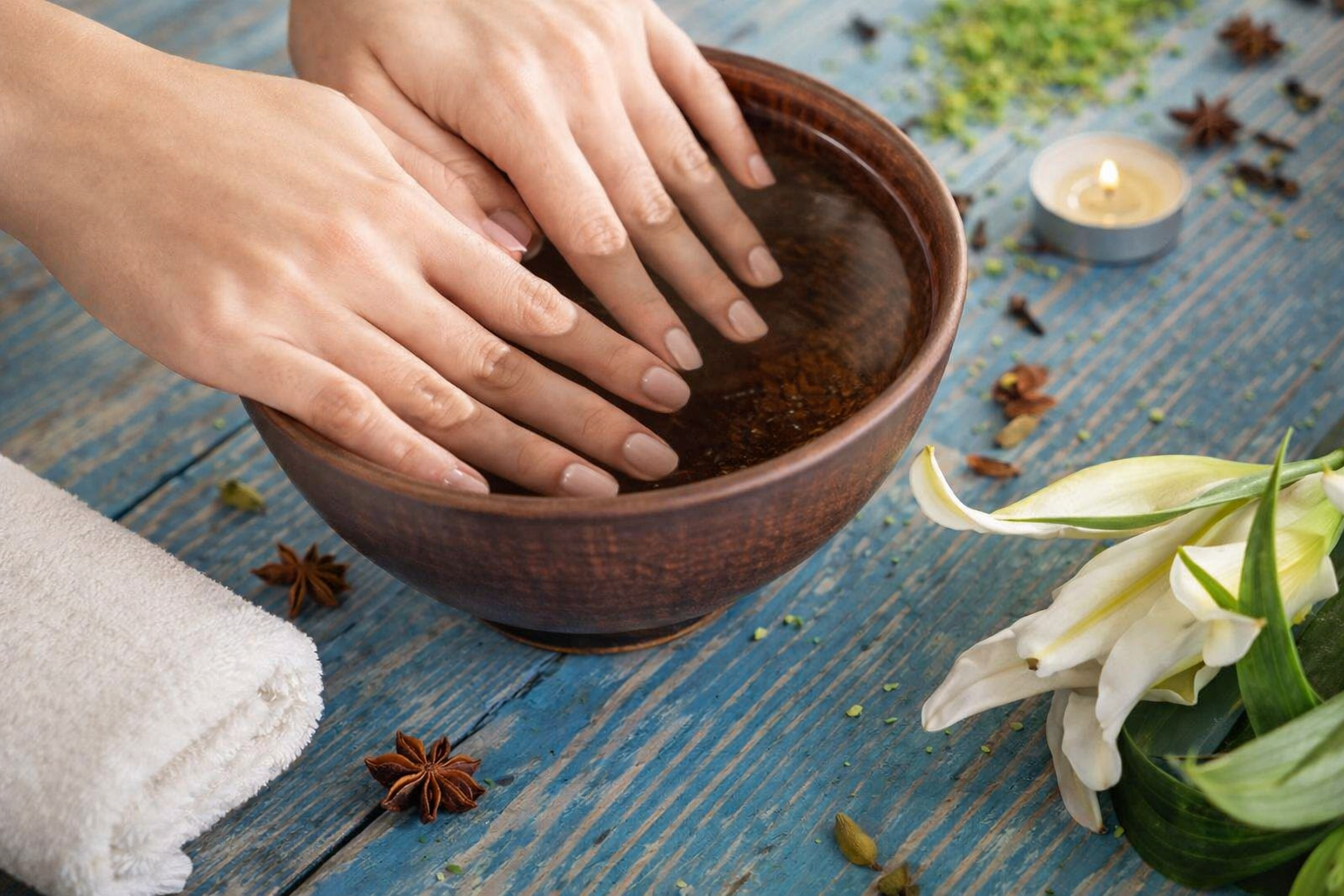
To reduce nail yellowing and restore their natural shade, try soaking treatments. An effective method is using a hydrogen peroxide solution: mix one part hydrogen peroxide with three parts water and soak your nails for a few minutes. This gently brightens the nail plate, giving it a fresher, healthier appearance.
After soaking, it’s important to moisturize your nails to maintain their health and support growth. A simple and effective home remedy is a mixture of olive oil and finely chopped garlic. Apply it once a week: garlic is rich in selenium, which helps strengthen nails and promote growth, while vitamin E in the oil deeply hydrates and nourishes the nail plate.
Antifungal treatments
If nail yellowing is caused by a fungal infection, the best solution is to consult a dermatologist. This is important for accurately identifying the type of fungus and choosing the right treatment. Any signs of a fungal infection should be treated with antifungal medications—either topical or systemic. A specialist may take a nail sample to determine the specific type of fungus and prescribe the most effective therapy.
Let Your Nails Take a Break from Acrylic Extensions
It’s recommended to take breaks between acrylic nail extensions, especially if you notice discoloration. First, carefully remove the acrylic and avoid applying regular nail polish or gel polish for at least 2–3 weeks. During this period, it’s especially important to minimize contact with water—protect your nails while showering or during any other water-related activities.
If you’ve been wearing acrylics continuously for three months, it’s best to take a longer break of 2–3 months to allow your natural nails to recover and strengthen.
When to See a Doctor
If nail yellowing persists even after new nail growth, the use of home remedies, or over time, you should consult a dermatologist. It’s particularly important to do so if you notice signs of a fungal infection. Professional advice is also necessary if the nail starts to crumble or appears to be gradually separating from the nail bed.
⸻
In addition to yellowing, acrylic nails can pose other risks to the health of the natural nail plate. Before application, the technician carefully prepares the nail by filing and buffing the surface to create the optimal texture, and only then applies the adhesive.
Acrylic nails are more rigid and form a strong bond—much stronger than the natural connection between the nail and its bed. Therefore, any damage, such as a hit or impact, can cause the natural nail to lift from the base.
Proper removal of acrylics also requires care. If the technician over-files the nails, they can become weakened, brittle, and more prone to damage.
However, taking breaks between procedures, visiting trusted salons, and maintaining regular nail care can help minimize yellowing and other potential negative effects sometimes associated with acrylics.
High-quality acrylic nail powder