DipPowder Nails vs. Gel Polish: What’s the Difference and Which Should You Choose?
Today, there are many different types of manicures, but dip powder and gel polish remain among the most popular options. Both provide a beautiful finish and good chip resistance. But which one is better and safer? In this article, we'll explore the key differences between these two techniques.
What Is a Dip Powder Manicure?
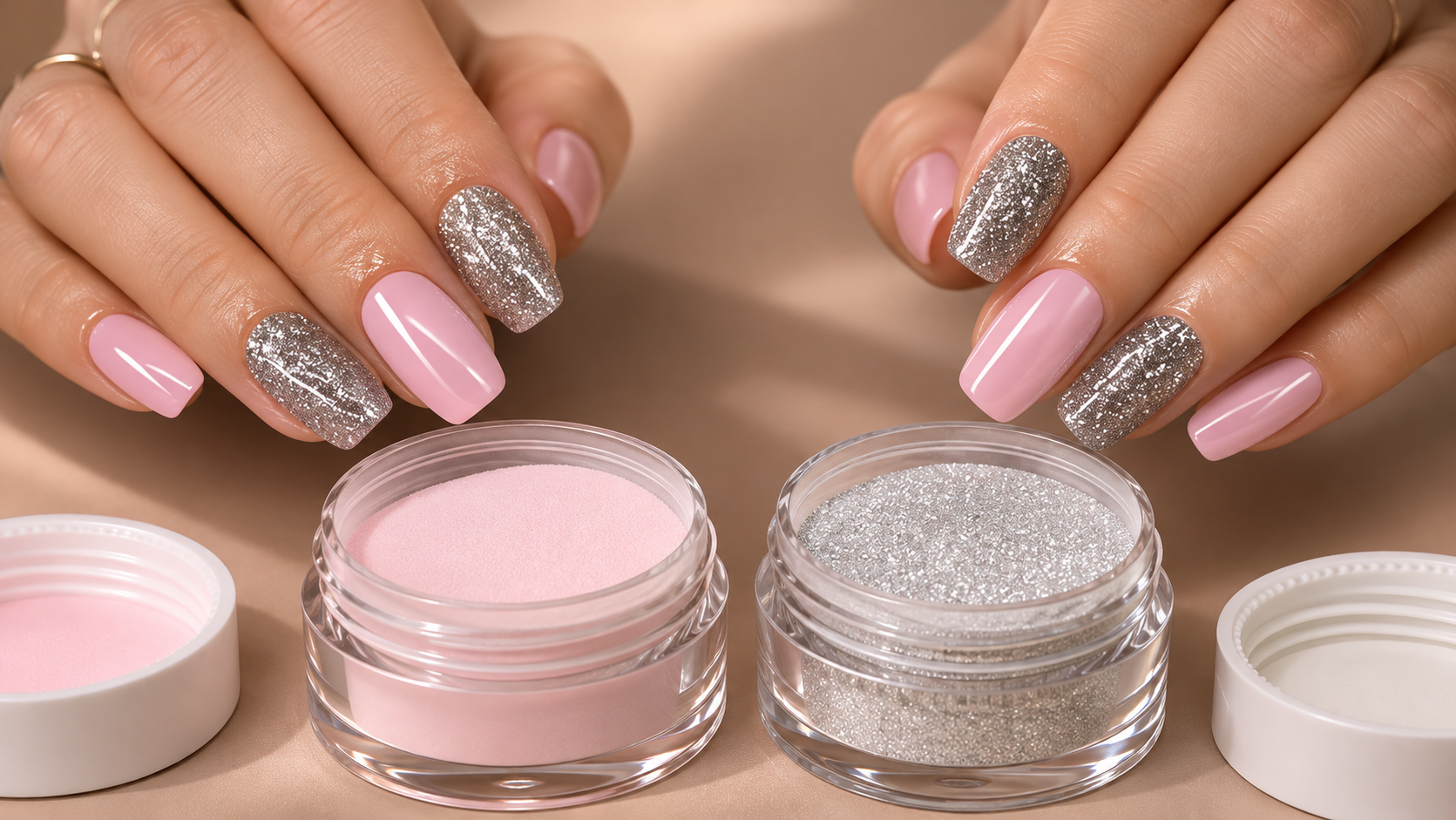
Dip powder is a type of acrylic powder. The polymers in its formula provide strength and help the manicure last up to four to five weeks. Dip powder is a great option for anyone looking for a long-lasting manicure that also helps strengthen natural nails.
How the procedure works:
• First, a bonding agent and base coat are applied to the nails.
• Next, each nail is dipped into colored powder. To achieve the desired coverage and color intensity, the process is repeated another one or two times.
• The nails are then buffed and shaped before a liquid sealant is applied to harden and secure the powder.
• Finally, a top coat is applied to add shine. Some nail technicians use a clear gel top coat and cure it under a UV or LED lamp to speed up drying time.
On average, a dip powder manicure costs between 450 and 700 lei. The price depends on the city and the nail technician's experience. Dip powder manicure
Is a Dip Powder Manicure Safe?
When getting a dip powder manicure, proper hygiene is especially important. If several clients dip their nails into the same jar of powder, the product can become contaminated with bacteria. The risk is particularly high if there are cuts or breaks in the skin. To avoid this, ask your nail technician to sprinkle the powder over your nails instead of dipping them into a shared container.
For some clients, inhaling dip powder can cause a runny nose, coughing, and a sore throat. These symptoms are sometimes referred to as "dip flu." To reduce the risk of respiratory irritation, make sure the area is well-ventilated: turn on the dust extractor, open a window, or wear a protective mask.
What Is a Gel Polish Manicure?
Gel polish is applied much like regular nail polish: first comes the base coat, followed by the color and top coat. The main difference is that each layer must be cured under a UV or LED lamp for 30–60 seconds. Today, most salons prefer LED lamps.
Gel polish is a liquid, resin-based product containing photoinitiators that react to LED or UV light, allowing the coating to harden quickly. LED lamps are more commonly used because they shorten curing time and generally result in less UV exposure than traditional UV lamps.
Gel polish adds strength and structure to the nails while allowing them to retain some flexibility. However, over time, the coating may lose adhesion and begin to peel. Another advantage of gel polish is the wide range of nail art possibilities, whereas dip powder offers more limited design options.
Gel polish is popular largely because of its durability. Unlike regular nail polish, it can remain chip-free for up to two to three weeks. The cost of the procedure depends on the salon's location and the nail technician's experience, averaging 300–500 lei.
It's important to take precautions when using gel polish. Prolonged contact with the skin can eventually trigger an allergic reaction. Possible symptoms include itching at the points of contact, which may sometimes spread to other areas of the body, as well as small red bumps and blisters. To avoid this reaction, make sure gel polish does not touch the skin. If it does, remove it before curing.
It's also important to consider UV exposure when curing your nails under a lamp. Experts recommend wearing UV-protective gloves that leave only the nails exposed. Another precaution is to apply sunscreen before the procedure. This can help reduce UV exposure to the skin.
• Application method: Unlike gel polish, dip powder does not need to be cured under a UV or LED lamp. Each layer dries naturally in the air. Gel polish, on the other hand, must be cured under a lamp for 30–60 seconds after each application.
• Appearance: The main difference lies in the formula. Dip powder contains polymers that affect the look and texture of the finished manicure. Nails with dip powder tend to look thicker, and the application technique is different because of the powder-based formula.
• Design options: Gel polishes come in a wider range of colors and finishes, from sheer to matte. Their liquid consistency also makes it easier to create intricate nail art. Dip powders are more commonly available in highly pigmented, glittery shades, with fewer design possibilities.
• Removal: Both dip powder and gel polish are removed using acetone. First, the top layer of the coating is filed down. Then, cotton pads soaked in acetone are placed over the nails, and each fingertip is wrapped in foil. However, dip powder lasts longer than gel polish, making it more difficult to remove. Improper application or removal can damage the nails.
When choosing between a dip powder manicure and gel polish, it's important to consider your personal preferences. Neither technique is considered safer for the nails than the other. Both provide a long-lasting finish with a beautiful glossy shine. Your decision should depend on the condition of your nails, your budget, and how long you want your manicure to last.
Dip powder is a good choice if you prefer a manicure that doesn't require a UV or LED lamp. Gel polish is a better option for those who love intricate nail art.
In either case, it's important to visit an experienced nail technician who can recommend the right product based on your nails' specific needs.
Both techniques can be safe when applied correctly and when proper precautions are followed. However, application mistakes and low-quality products can lead to nail damage and other unwanted effects.