Why Does Gel Polish Start Lifting in Summer? 4 Reasons and Tips for a Long-Lasting Manicure
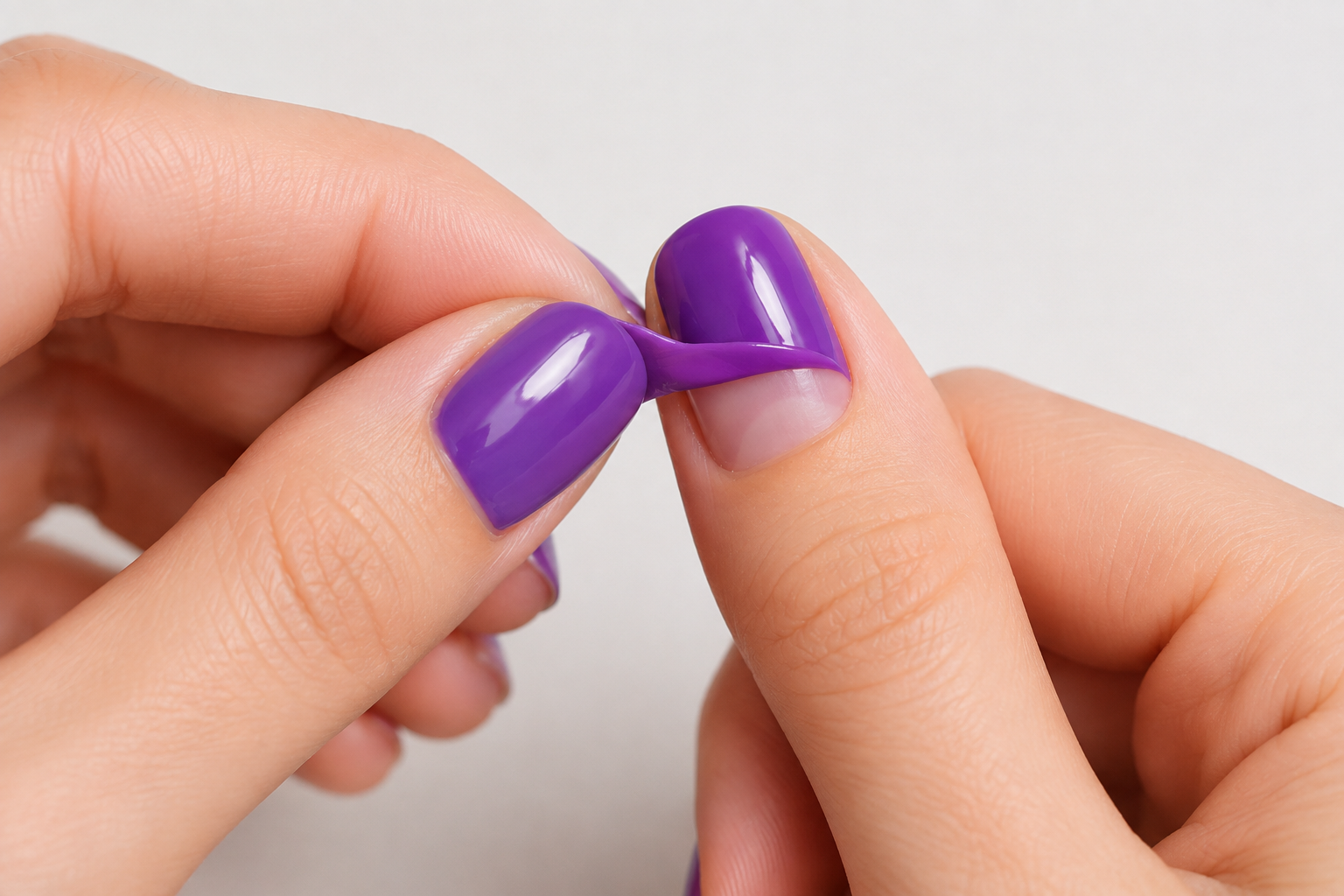
Even in spring, your manicure may have stayed flawless, as if it had become one with the nail plate, easily surviving Saturday’s deep cleaning and Sunday’s chores at the country house. But now, does your gel polish start lifting after an ordinary trip to the beach? There are several possible reasons.
And the first is heat: high temperatures trigger changes in the body that can also affect the nail plate.
Humidity affects manicure durability
Warm, humid summer air can reduce the adhesion of gel polish to the nail plate. That’s why, during rainy weather or periods of high humidity, it’s better to do your manicure indoors in a comfortable, controlled environment.
Frequent contact with water can also affect how long your manicure lasts: swimming, long showers, washing your hands, and even condensation from cold drinks can all expose your nails to moisture. Water can penetrate tiny imperfections in the coating and gradually contribute to lifting. To keep your gel polish looking neat for longer, try to avoid prolonged contact with water and protect the coating from damage.
This doesn’t happen by chance: skin sebum is a natural protective barrier that helps retain moisture. However, excess sebum on the surface of the nail plate can interfere with the adhesion of the product to the nail. Even a thin, barely noticeable layer of oil can reduce adhesion and, consequently, affect the durability of the coating.
That’s why thorough nail preparation before applying gel polish is especially important: dirt and excess sebum should be removed to ensure proper adhesion between the product and the nail.
Nails grow faster during the summer
Studies show that nail growth can vary depending on the season: during warmer months, nails often grow faster than in winter. This can also affect gel polish: the coating may not adapt quickly enough to changes in the nail plate, which can lead to cracks near the sidewalls or at the free edge.
Nails expand and contract as temperatures change
The nail plate, like other solid materials, reacts to temperature changes: when heated, it expands slightly, and when cooled, it contracts. For example, when you move from a cool room into hot weather, your nails are exposed to a small temperature change.
If this is combined with frequent contact with water, the stress on the coating increases. If adhesion to the nail plate is not strong enough, this can lead to microcracks, chips, and lifting.
In winter, these temperature changes are less noticeable because we protect our hands with gloves or keep them in our pockets. In summer, however, it is almost impossible to avoid high temperatures completely, so the coating may be subjected to greater stress.
How can you make gel polish last longer in hot weather?
1. Use a nail dehydrator — a special product that degreases and dries the nail plate, removing both surface moisture and excess moisture that has penetrated deeper into the nail.
2. Wear gloves with a cotton lining when doing household chores involving water. Take breaks so that sweat does not accumulate inside the gloves and your nails are not exposed to prolonged moisture.
3. Reduce mechanical stress on your nails: do not use them as tools and avoid impacts.
4. Make sure you properly degrease your nails before applying gel polish: wash your hands with a cleansing product, then wipe the nails with a lint-free pad moistened with alcohol or acetone.
Which products can help your manicure last longer in summer?
If your gel polish has started to last less effectively during the summer, pay attention not only to the gel polish itself but also to the preparation of the nail plate. A dehydrator helps remove excess moisture and prepares the nail for the application of subsequent products, while the right base coat provides reliable adhesion and helps the manicure last longer.