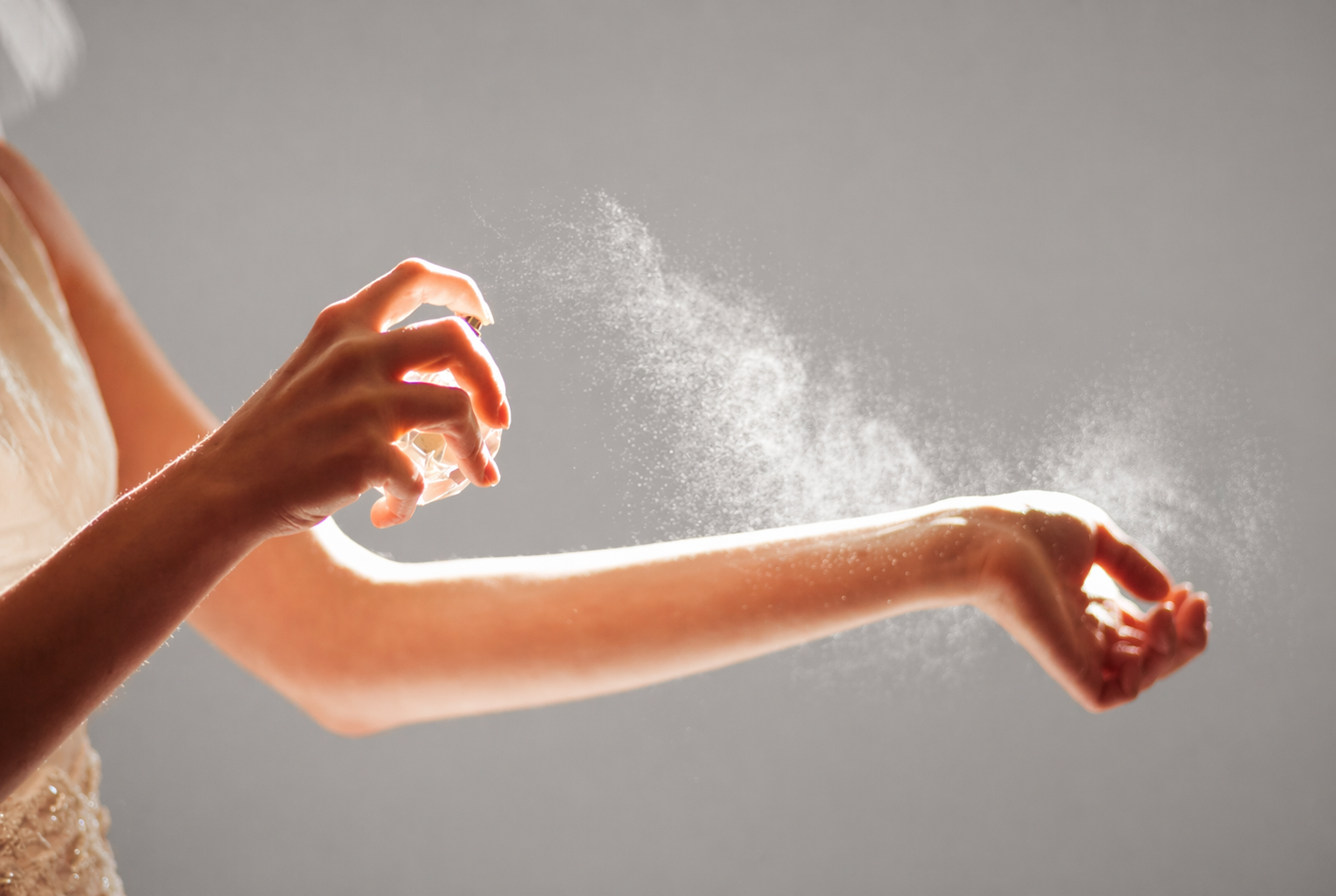
Consider this article our call to stop saving your perfume for the very last drop. When we find a fragrance we truly love and pay a considerable amount for it, it is only natural to want to use it sparingly, trying to save every spray. However, being overly careful can actually work against you.
In fact, avoiding frequent use of your favorite fragrance does not always benefit it: perfume has a shelf life. Moreover, improper use and storage can alter its chemical composition, causing the fragrance to deteriorate faster and lose its original properties.
In this article, you will learn how to tell if your perfume has gone bad and which tips can help extend its shelf life.
Do Perfumes Have an Expiration Date?
Signs That Your Perfume Has Gone Bad
Like most cosmetic products, perfumes unfortunately have a shelf life. However, how long a fragrance can be used depends on its composition and how much time has passed since the bottle was opened. Most manufacturers recommend using perfume within one to three years after opening — the exact period is indicated on the packaging. However, since fragrance does not spoil in the same way as food, it can sometimes still be used after four or five years.
At the same time, perfume does not necessarily lose its intensity, but its scent may change over time: the fragrance oxidizes, becomes sour, and may sometimes develop metallic or even plastic-like notes. Excess oxygen inside the bottle can alter the molecules of the perfume composition, affecting its original scent.
In fact, avoiding frequent use of your favorite fragrance does not always benefit it: perfume has a shelf life. Moreover, improper use and storage can alter its chemical composition, causing the fragrance to deteriorate faster and lose its original properties.
In this article, you will learn how to tell if your perfume has gone bad and which tips can help extend its shelf life.
Do Perfumes Have an Expiration Date?
Signs That Your Perfume Has Gone Bad
Like most cosmetic products, perfumes unfortunately have a shelf life. However, how long a fragrance can be used depends on its composition and how much time has passed since the bottle was opened. Most manufacturers recommend using perfume within one to three years after opening — the exact period is indicated on the packaging. However, since fragrance does not spoil in the same way as food, it can sometimes still be used after four or five years.
At the same time, perfume does not necessarily lose its intensity, but its scent may change over time: the fragrance oxidizes, becomes sour, and may sometimes develop metallic or even plastic-like notes. Excess oxygen inside the bottle can alter the molecules of the perfume composition, affecting its original scent.
Oxidation can affect the top notes — for example, citrus and aromatic ingredients, which are particularly sensitive to this process — and can also change the fragrance's sillage. Different formulas oxidize at different rates, which is why some perfumes last longer than others. This is especially noticeable with chypre compositions containing a high concentration of patchouli: they can lose their original scent more quickly.
Fragrances with high chemical stability tend to last the longest. Woody notes and amber remain relatively stable even after three years.
Citrus fragrances can be stored in the refrigerator to slow down oxidation. The more air that remains inside the bottle, the faster the fragrance changes. Therefore, saving the last few drops of your favorite perfume “for later” is not the best idea. If there is only a small amount of perfume left, you can transfer it to a travel atomizer: this reduces the amount of air inside and can help the fragrance retain its properties for longer.
How to Tell If Your Perfume Has Gone Bad
How to Know If Your Perfume Has Gone Bad
The top notes usually change first — this is where changes are most noticeable. The color of the liquid may also change: most fragrances have a yellowish tint due to the oils they contain, while spoiled perfume can gradually darken to brown.
Is There a Difference in Shelf Life Between Different Types of Perfume?
As mentioned earlier, some fragrance families — such as citrus scents — are more prone to rapid oxidation. However, the formula has an even greater impact on a perfume's shelf life. Fragrances with a high alcohol content generally last longer because alcohol slows down the oxidation of aromatic molecules. You may be used to considering alcohol an undesirable ingredient in cosmetics, but in perfumery, the opposite is true. It is one of the main preservative components that helps maintain the fragrance's original properties.
These are usually colognes or eau de toilette with an alcohol content of around 90%. The less concentrated the fragrance, the longer it may retain its properties. As a rule, a perfume composition contains 70–90% alcohol, which helps protect it from deterioration.
Below are the types of fragrance products listed in descending order of alcohol content — from the highest to the lowest:
• Eau de Cologne
• Eau de Toilette
• Eau de Parfum
• Perfume Extract
• Eau Fraîche
How to Extend the Shelf Life of Your Perfume
• Protect it from light: Although perfume bottles look beautiful on a windowsill, this is one of the worst places to store them. Light breaks down the molecules in the perfume composition, making the fragrance unstable and more prone to oxidation.
• Protect perfume from heat and humidity: High temperatures accelerate the breakdown of aromatic molecules and can alter their chemical composition. Experts recommend storing perfume at temperatures below 15°C (59°F) and avoiding the bathroom, where temperature and humidity fluctuations can negatively affect its quality.
• Keep using the perfume until the bottle is empty: When only half of the liquid remains, the amount of oxygen inside the bottle increases, raising the risk of changes to the fragrance. If you have a large collection, rotate your perfumes: use the bottles with the least amount of liquid first, while keeping the others in a cabinet or drawer.
• Keep perfume in its original bottle: Transferring fragrance into atomizers or travel bottles may be convenient, but frequent exposure to oxygen during transfer can shorten its shelf life.
• Store it in a cool place: To maintain an optimal temperature, perfume can be stored in the refrigerator. However, this is not the best option if the refrigerator door is opened frequently and the light is constantly switched on.
You can wrap the bottle in aluminum foil or, even better, store it in the freezer. Thanks to its alcohol content, most fragrances will not freeze. Plus, cool perfume can feel especially refreshing when applied to the skin.
How Long Can Perfume Last in an Unopened Bottle?
Unopened bottles stored in a cool, dark and dry place can remain in good condition for years or even decades — it all depends on the perfume's composition and storage conditions.
Be careful with vintage finds: by the time you purchase them, the fragrance's top notes have usually already changed. If the bottle has already been opened, use the fragrance while it still retains its original properties.
An opened bottle of perfume can retain its properties anywhere from three months to three years — depending on the fragrance's composition, the type of bottle and the storage conditions after opening.
Is It Safe to Use Expired Perfume?
Can You Use Old Perfume?
It depends on the situation. Oxidized ingredients can irritate the skin and may sometimes even leave stains on clothing. Always test the product on a small area of skin first, such as the inside of your wrist. If no reaction occurs within 24 hours, use it with caution and at your own risk.
Experts also recommend being careful: expired products can cause an allergic reaction when they come into contact with the skin.
If the perfume does not leave stains on fabric but you are still unsure whether you should apply it to your skin, try scenting your clothes instead. A scarf, handkerchief, or the inside of a skirt or trouser hem can be a great way to wear perfume.
Proper perfume care helps preserve its fragrance and extend its shelf life. Applying it correctly can also help you enjoy your favorite notes on the skin for longer. Do not rub perfume into pulse points: body heat can accelerate the evaporation of certain notes. Instead, apply perfume to slightly moisturized skin — this helps the fragrance last longer and develop gradually.
WOMEN'S AND MEN'S FRAGRANCES AT AFFORDABLE PRICES --->
Read also: TOP 5 budget fragrances for women that smell like luxury: you can smell expensive without overpaying