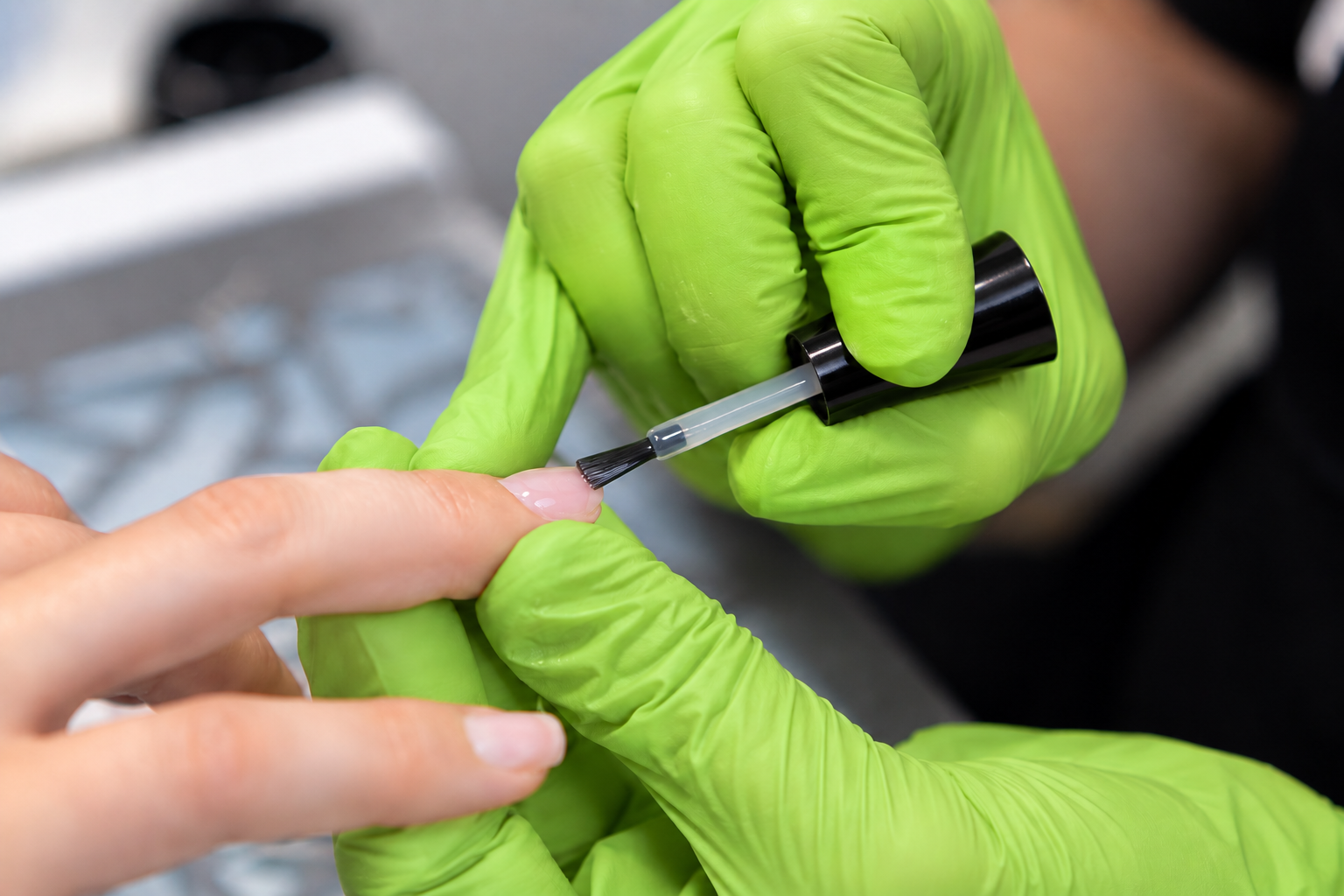
If you do your nails with gel polish or builder gel, you have probably wondered at least once: is it really necessary to apply a base coat? The short answer is — in most cases, yes. A base coat improves adhesion between the product and the natural nail, protects the nail plate, and helps extend the life of your manicure. However, there are some nuances depending on whether you use gel polish, builder gel, or regular nail polish.
In this article, we’ll explain when a base coat is necessary, how gel polish, builder gel, and regular nail polish differ, how to choose the right product for your nail type, and how to apply it correctly for a neat and long-lasting manicure.
What Is a Nail Base and Why Is It Needed?
A base coat is the first layer applied to the natural nail plate before gel polish or builder gel. It helps create reliable adhesion between the natural nail and the following product.
Think of it as the foundation of a building: if the foundation does not adhere properly to the surface, the coating will not last either. Without this layer, the product may start lifting or chipping around the edges much sooner.
In most cases, a professional base coat:
• improves adhesion between the natural nail plate and the color coating;
• protects nails from staining caused by pigments;
• smooths out minor imperfections;
• helps prevent lifting;
• provides additional reinforcement, depending on the formula.
• protects nails from staining caused by pigments;
• smooths out minor imperfections;
• helps prevent lifting;
• provides additional reinforcement, depending on the formula.
Is Applying a Base Coat Necessary? It Depends on the Technique
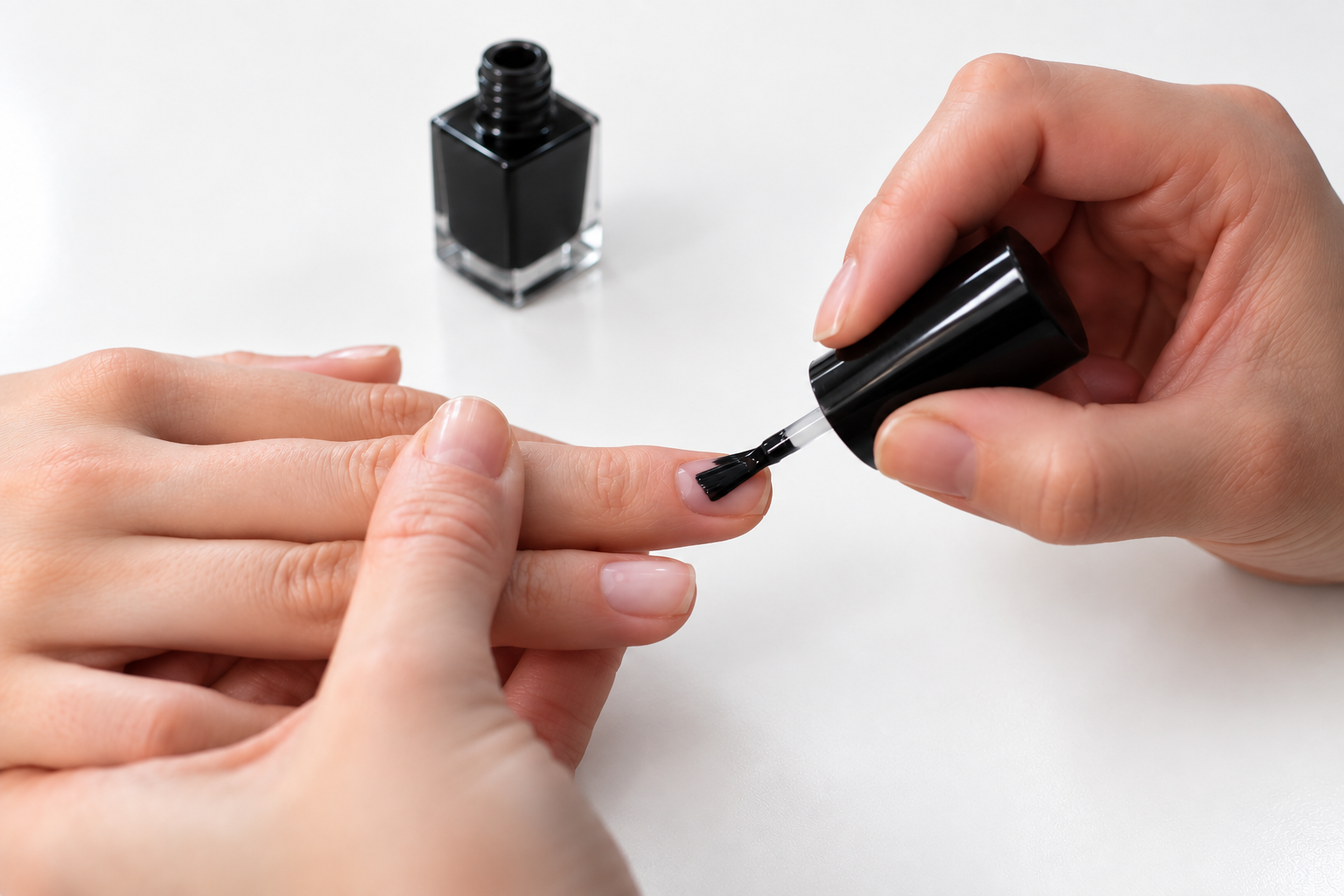
1. Gel Polish — Yes, You Should Apply a Base Every Time
If you use gel polish, do not skip the base coat. Gel polish is not designed to provide reliable adhesion directly to the natural nail plate. In practice, applying gel polish without a base can often lead to the following problems:
• lifting after just a few days;
• lifting around the cuticle area;
• staining of the natural nail plate, especially when using highly pigmented shades such as red, burgundy, or dark blue.
• lifting around the cuticle area;
• staining of the natural nail plate, especially when using highly pigmented shades such as red, burgundy, or dark blue.
For a flawless result, choose formulas designed for professional use. Global Fashion offers professional base coats and top coats with formulas tested according to European standards. They are suitable for both at-home manicures and professional nail technicians.
2. Builder Gel Extensions — Usually, Yes
The correct order is: preparation → primer (if needed) → base coat → builder gel.
Applying builder gel directly to the natural nail plate can increase the risk of lifting.
A base coat creates an adhesion layer and helps ensure even distribution of the material.
A base coat creates an adhesion layer and helps ensure even distribution of the material.
There are all-in-one systems available, but for regular use at home or in a salon, applying a separate base coat gives you greater control and more consistent results.
3. Regular Nail Polish — Recommended, but Not Mandatory
With regular nail polish, you can apply the color directly to the natural nail plate. However, a base coat protects the nails and helps the polish stay smooth and neat for longer.
If you often choose dark shades, using a base coat is recommended even for a classic manicure.
What Happens If You Skip the Base Coat?
Maybe you want to save time or think that healthy nails do not need additional protection.
In reality, skipping the base coat can often lead to:
• Premature lifting — the product starts to separate around the cuticle area.
• Air bubbles appearing underneath the coating.
• Peeling between layers of the gel polish.
• Staining of the natural nail plate.
• Reduced durability, especially on flexible nails.
• Air bubbles appearing underneath the coating.
• Peeling between layers of the gel polish.
• Staining of the natural nail plate.
• Reduced durability, especially on flexible nails.
These problems are more common with oily or thin nails. That is why nail technicians use a base coat: it helps reinforce the coating and reduce the risk of these issues.
Base Coat and Primer — How Should They Be Used?
Confusion between primer and base coat is common among beginners.
Primer is applied directly to the prepared and dehydrated nail plate. It does not require curing in a lamp: it promotes chemical adhesion and dries naturally. Depending on the nail type, a primer can be acid-based or acid-free.
A base coat is applied after the primer and cured under an LED or UV lamp. It creates a supportive layer for the following product.
One product does not replace the other — each has its own specific function.
How to Apply a Base Coat Correctly: Simple Steps
Proper application can make the difference between a manicure that lasts 3 days and one that maintains a flawless appearance for 2–3 weeks.
1. Prepare the Natural Nails
Gently push back the cuticles and remove any excess. Lightly buff the nail plate with a soft buffer without applying excessive pressure.
Remove the dust and cleanse the nails with a nail cleanser. The surface should be clean and free from oils, sebum, and other impurities.
2. Apply Primer If Necessary
If the nail plate is oily or lifting is a recurring problem, apply a thin layer of acid-free primer. Allow it to air-dry completely.
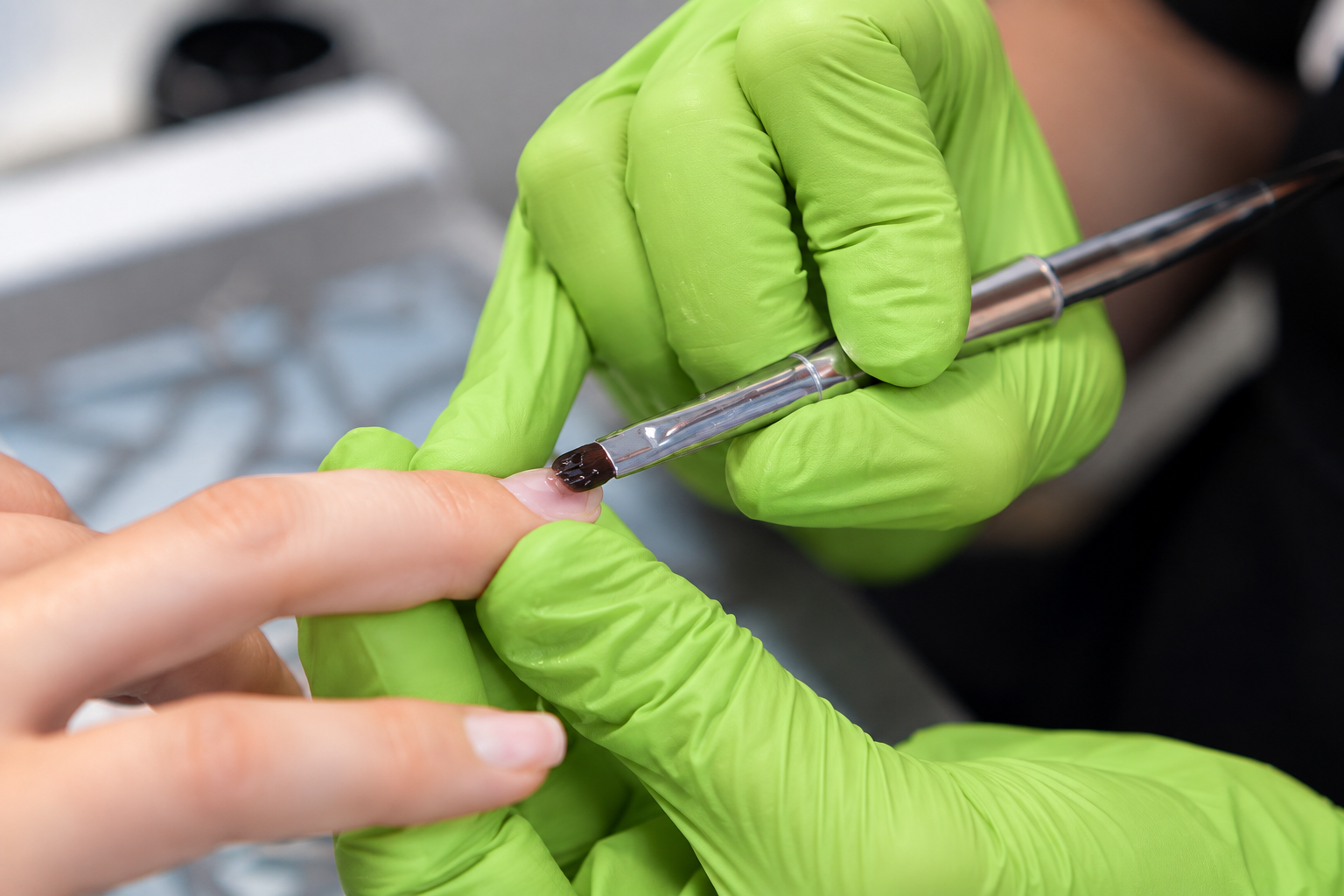
3. Apply a Thin Layer of Base
Pick up a small amount of product with the brush. Distribute the base evenly from the center of the nail toward the cuticle, avoiding contact with the skin.
Spread the product in a thin, controlled layer and seal the free edge of the nail. The coating should be even and well-controlled.
4. Cure Properly
Follow the curing time recommended by the manufacturer: usually 60 seconds in an LED lamp or 2 minutes in a UV lamp.
After curing, the surface may remain slightly tacky — do not wipe it off. This layer helps the color coating adhere securely to the base.
Which Base Coat Should You Choose?
The right choice depends on your nail type and the result you want to achieve.
Classic Base Coat
Suitable for healthy nails without flexibility issues. It is applied in a thin layer and creates a strong foundation for the color coating.
Rubber Base — For Thin or Flexible Nails
Rubber Base has a denser and more elastic texture. It is recommended for nails that bend easily or are prone to peeling and splitting.
It helps create a subtle apex and smooth the surface of the nail plate. Nail technicians often use it to achieve a long-lasting manicure, even on more challenging nails.
Fiber Base
For very fragile nails, fiber bases provide additional support. They can be used for short extensions without a separate builder gel. These products are particularly convenient for nail technicians who value speed and greater control during application.
Common Mistakes to Avoid
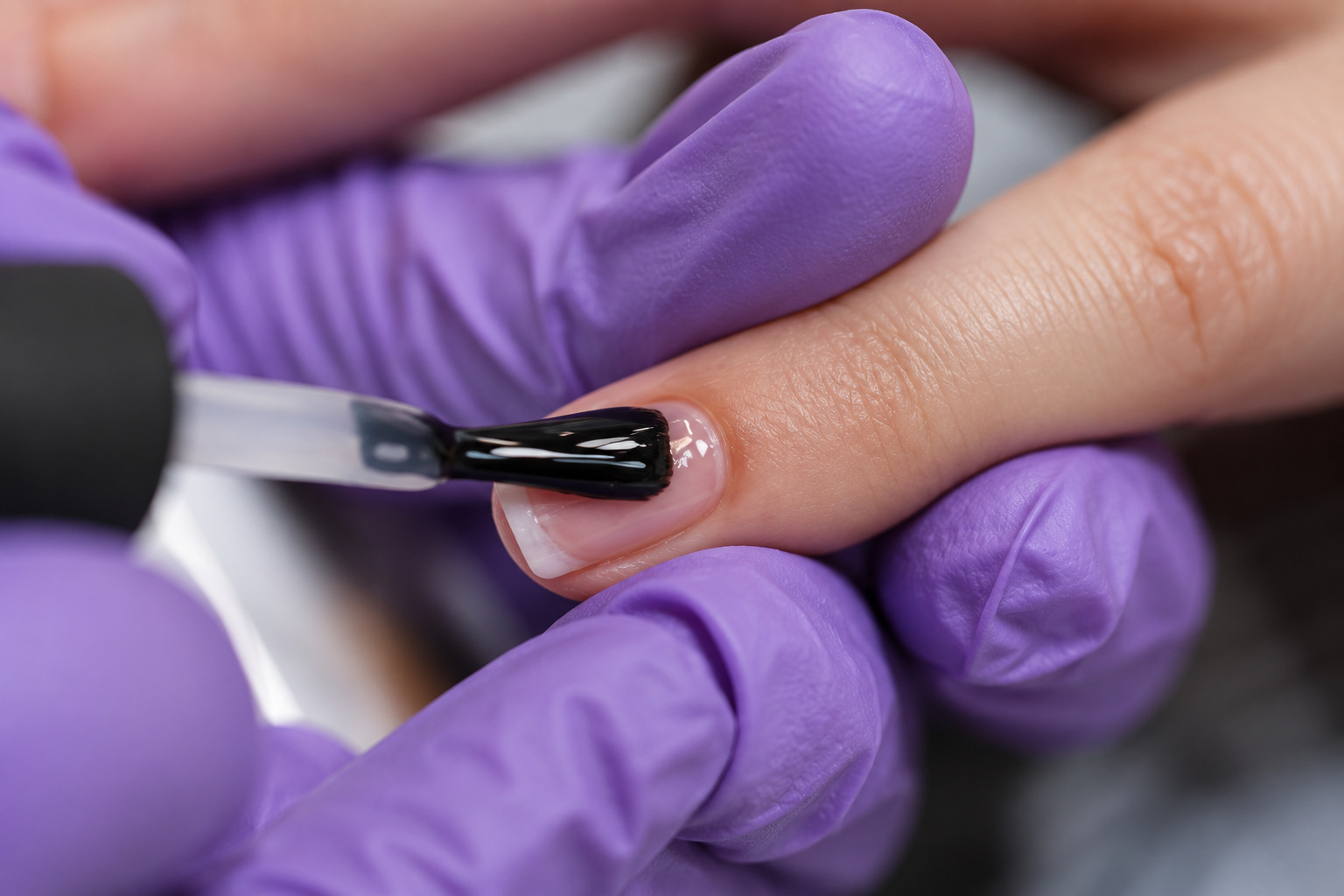
• Applying too thick a layer. The product may not cure properly, which can lead to lifting.
• Touching the cuticle with the product. The coating may begin to lift precisely in this area.
• Not properly cleansing the nail plate. Dust and sebum can reduce adhesion.
• Using a weak lamp or one with worn-out LEDs. Check your equipment regularly.
Avoid these mistakes, and you will notice the difference after your very next manicure.
• Touching the cuticle with the product. The coating may begin to lift precisely in this area.
• Not properly cleansing the nail plate. Dust and sebum can reduce adhesion.
• Using a weak lamp or one with worn-out LEDs. Check your equipment regularly.
Avoid these mistakes, and you will notice the difference after your very next manicure.
If you want a long-lasting manicure, start with the right base coat. Choose your product carefully and follow the correct application technique. Explore professional product ranges at globalfashion.md or visit one of our two stores for personalized advice. Order online and create a manicure that reflects your individual style!
Frequently Asked Questions (FAQ)
Do I need to apply a base coat every time I use gel polish?
Yes. For a long-lasting manicure and protection of the natural nails, apply a base coat every time. Skipping this step can lead to lifting and premature chipping.
Can I apply two layers of base coat?
Yes, you can apply two thin layers, especially when using a rubber base to strengthen weak nails. Cure each layer separately and avoid making the coating too thick.
Why does my base coat start lifting after a few days?
The main causes are improper nail preparation, applying the product too close to the cuticle, using a layer that is too thick, or insufficient curing. Check each step of your application routine and use professional-quality products.